
Word count: 790 | Audience: architects, interior designers, hotel specifiers, FF&E procurement specialists
For many hospitality projects, flooring is treated as a background specification: functional, neutral, and secondary to joinery, lighting or upholstery. But for experienced hotel designers, carpet is far more than a floor covering. It shapes acoustics, controls perceived luxury, defines spatial zones, softens hard architectural lines, and carries a hotel’s brand narrative from lobby to guest corridor, restaurant and suite. In high-end hospitality, the right carpet turns a transactional overnight stay into a memorable sensory experience—and this is where Barjis partners with specifiers to bridge creative vision with robust, code-compliant performance.
The first rule of hospitality carpet specification is simple: design must follow zone function. No single carpet construction works across an entire hotel. Corridors, the most punishing high-traffic zones, face constant footfall, rolling luggage wheels and housekeeping trolleys. Here, dense low-pile Axminster or tight loop constructions are preferred, chosen to resist crushing, mask wear lines and support regular deep cleaning. Guest bedrooms demand a different balance: softer texture for barefoot comfort, while still meeting commercial wear ratings and stain resistance standards. Lobbies, bars and ballrooms become storytelling zones, where pattern, colour and texture can anchor a concept, frame art or guide guest circulation without overwhelming the interior architecture.
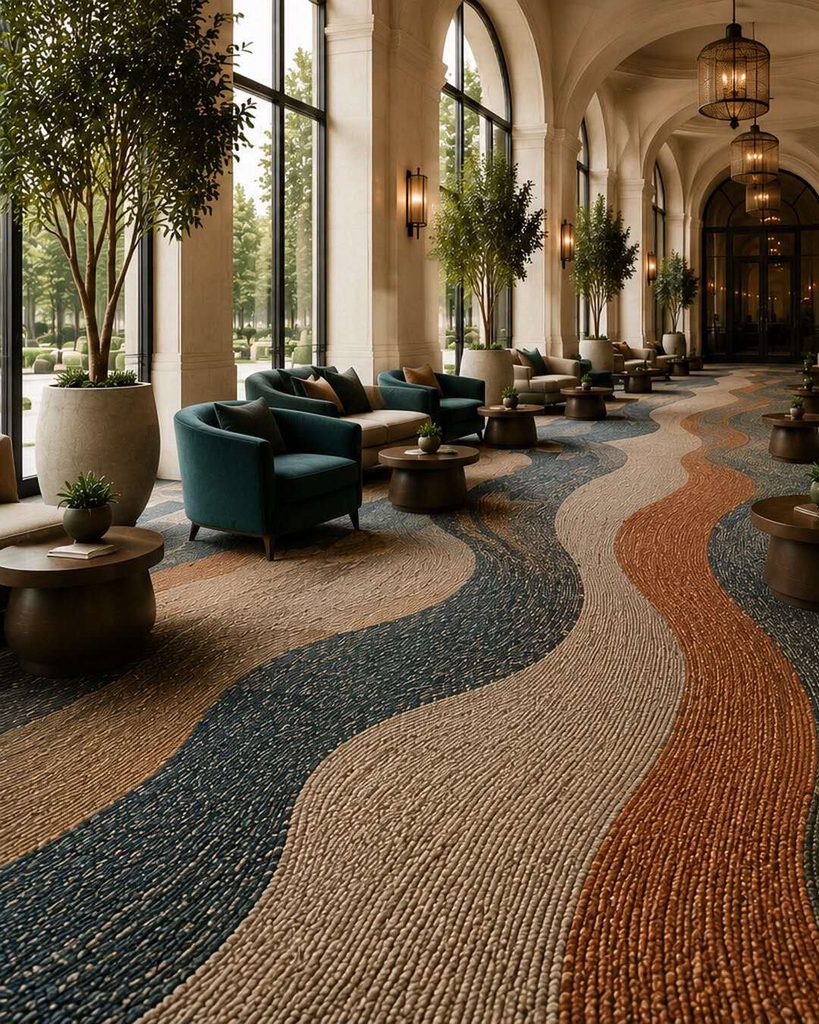
This distinction highlights the core gap between standard off-the-shelf flooring and custom hospitality carpet. Standard broadloom and carpet tiles serve reliable, repeatable projects well, with fast lead times and predictable pricing. But they impose limits: fixed colourways, rigid pattern repeats and construction optimised for generic commercial spaces, not a designer’s unique brief. Custom carpet from Barjis removes those constraints. We work from your mood board, material palette and architectural drawings to tune scale, colour, texture and weave method to the space. A long, repeating corridor can use directional pattern that visually shortens endless walkways; a grand lobby can integrate subtle brand motifs, local heritage references or tonal gradients that align with the interior’s concept, rather than forcing the design to fit a pre-made product.
Texture and pattern are among the most underused tools in hospitality specification. A flat, monochrome carpet can feel sterile, while overly large, busy patterns risk visual fatigue and date quickly. Successful hotel carpet uses pattern strategically: small, tonal textures hide spillage and wear; larger scaled motifs work in generous open spaces; subtle linear or organic flows reinforce movement through a layout. Fibre choice amplifies this effect. Wool brings natural resilience, inherent flame retardancy and warm depth; nylon blends deliver excellent stain resistance and colour fastness for busy public zones; mixed-fibre constructions balance luxury feel with long-term maintenance practicality. At Barjis, our design team advises specifiers on this trade-off early, before samples are finalised, so aesthetic ambition never outruns operational reality.
Compliance and maintainability are non-negotiable for procurement and asset teams, and they should be embedded in the design conversation from day one. Hospitality carpet must satisfy local fire and smoke regulations, slip resistance standards and accessibility requirements—including low pile profiles for wheelchairs and trolley movement. A beautiful carpet that fails compliance, marks easily or requires specialist, costly cleaning is a specification failure, no matter how striking it looks in a showroom sample. This is why our process runs from concept through to full technical specification: we supply certified performance data, test reports, installation guidance and maintenance schedules alongside design visualisations and strike-off samples, so architects and designers have everything needed for tender, FF&E packs and contractor handover.
Working with Barjis means you are not simply ordering a product; you gain a dedicated specification partner. Our background in luxury interior and textile design lets us speak your creative language, while our long-standing production knowledge of Axminster, hand-tufted and broadloom techniques keeps projects grounded in buildability, budget and timeline. We support small boutique conversions and large-scale hotel rollouts alike, iterating samples, adjusting colour matches and resolving site-specific challenges before installation begins.
In an era where hard flooring dominates mood boards, carpet retains a unique advantage: it absorbs sound. In corridors and guest rooms, it cuts footfall and trolley noise, one of the most common guest complaints in hotels. Combined with intentional pattern, texture and bespoke colour, it becomes a quiet, constant contributor to guest comfort and perceived quality.
Great hospitality design is felt before it is named. The carpet underfoot is one of the first and last surfaces a guest experiences. When specified thoughtfully, it does not compete with the architecture — it completes it. Whether your next project calls for understated tonal texture, a bold bespoke narrative weave or a hard-working high-traffic corridor solution, Barjis is ready to translate your concept into a durable, compliant and distinctive floor.
